
ServiceChannel
Modified on
May 22, 2026
Table of Contents
Discover how AI-powered provider management helps multi-site facilities teams reduce manual follow-up, track SLA compliance, and make faster, more informed decisions.
AI in provider management refers to the use of artificial intelligence models, such as machine learning and generative AI, to help facilities teams coordinate service providers more efficiently across locations, reduce manual follow-up, and improve visibility into provider activity. In facilities environments, AI systems can support provider selection, onboarding, dispatch decisions, SLA monitoring, compliance tracking, invoice review, and performance optimization across distributed locations.
Rather than functioning as a standalone chatbot or isolated reporting tool, organizations increasingly embed AI-powered provider management directly into operational workflows. Using technologies such as natural language processing and data analysis, embedded AI helps facilities teams move from reactive oversight to more proactive management by enabling earlier issue identification, prioritization, and faster decision-making in day-to-day workflows.
This approach allows facilities organizations to reduce manual oversight, improve visibility into provider performance, and maintain more consistent service quality across large provider networks. Instead of replacing human decision-making, AI supports facilities teams with clearer visibility into provider activity and next steps.
Why Is AI Becoming Essential for Provider and Contractor Management?
Managing a multi-site provider network has historically been a game of reactive firefighting. Facilities leaders often struggle with fragmented provider data and manual processes, like phone-tag follow-ups and spreadsheet-based compliance tracking, that consume hours of repetitive labor. This lack of visibility often leads to inconsistent service quality and unpredictable spend. When every location operates in a silo, responding to provider variability becomes a manual burden that dramatically limits flexibility.
Embedded AI is becoming essential because it transforms these “dead-end” data fragments into information that teams can act on more quickly. Rather than just recording what happened, AI-powered systems enable:
- Faster decision-making by surfacing the best-fit provider based on historical SLA performance.
- Improved coordination between onsite teams and providers to ensure technicians arrive prepared.
- Reduced follow-up through automated verification of work order status and compliance.
This shift gives facilities teams better visibility into provider performance, SLA risks, and operational delays before they become larger disruptions.
How Does AI Improve Contract and Lifecycle Management?
Administrative friction can bog down the traditional provider lifecycle — from initial onboarding and supplier agreements to contract renewal and final invoice payment. Every manual handoff creates opportunities for missing documentation, delayed approvals, compliance risks, or important contract terms slipping through the cracks. For facilities teams managing multiple providers across distributed locations, reviewing contracts and tracking obligations manually can quickly become time-consuming responsibilities.
AI contract management streamlines these processes by enabling facilities teams to track provider agreements and compliance requirements throughout the contract lifecycle. AI-powered systems can scan contracts, monitor provider agreements for compliance requirements, pinpoint potential risks, and support obligation tracking tied to SLA expectations and operational performance. By streamlining repetitive tasks like document verification and contract review, facilities teams can reduce manual follow-up while maintaining human oversight and improving visibility across the entire provider network.
What Are the Key Capabilities of AI in Provider Management?
AI-powered provider management platforms put power in the hands of facilities teams by automating repetitive tasks, improving operational visibility across assets, and enabling faster decision-making across large provider networks. Rather than relying on disconnected spreadsheets and manual processes, embedded AI supports proactive workflows throughout day-to-day operations.
Onboarding and Credential Verification
AI can automate onboarding workflows by verifying licenses, insurance documents, and compliance credentials in real time. This reduces the need for manual follow-up while helping maintain consistent provider compliance across locations.
Dispatch and Provider Selection
AI systems can analyze historical data, current provider availability, and past SLA performance to inform faster dispatch decisions and better provider matching. This helps technicians arrive better prepared while improving resource allocation.
SLA Monitoring and Compliance
Embedded AI helps teams track SLA adherence, detect exceptions, and trigger alerts when there’s a risk of noncompliance. Automated escalation workflows help facilities teams address missed milestones before they impact service quality or uptime.
Invoice Auditing and Spend Control
AI-powered invoice validation can quickly identify anomalies, duplicate charges, and billing inconsistencies that are hard to spot in manual processes. This reduces the administrative workload while helping organizations recover avoidable charges more consistently and reducing unnecessary spend.
Performance Optimization and Benchmarking
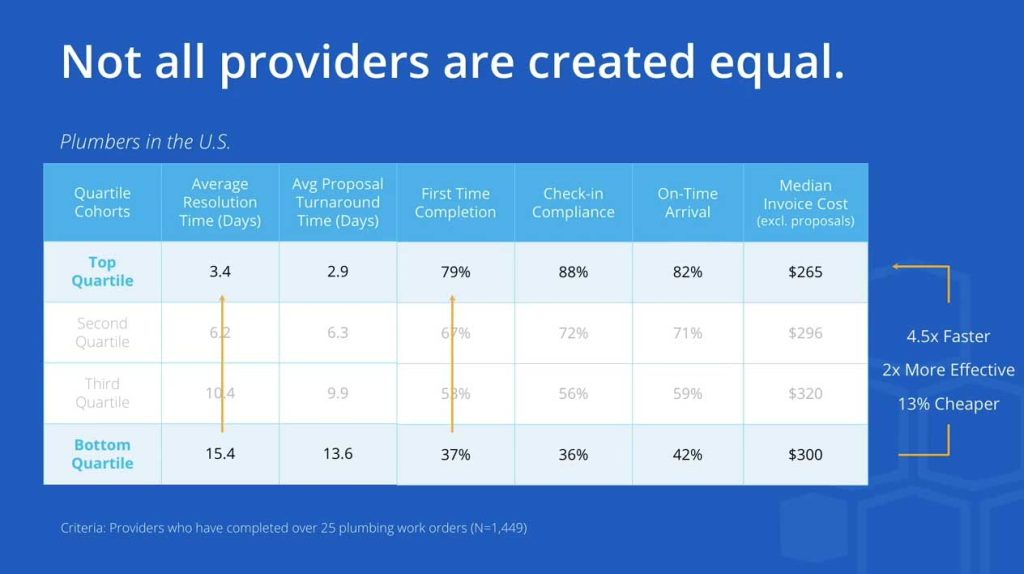
AI tools can track key performance indicators (KPIs) to show which providers are performing well, which ones are falling behind, and how those patterns change over time. Facilities teams can use this information to identify underperforming providers, improve accountability, and make stronger long-term network decisions.
What Are the Benefits of AI-Powered Provider Management?
For facilities teams managing multiple locations, even small operational slowdowns can create larger disruptions across the business. AI-powered provider management helps reduce that friction by giving teams better visibility into provider activity, automating repetitive administrative tasks, and helping facilities leaders prioritize the work that needs immediate attention.
Visibility
That visibility makes a major operational difference. When facilities teams can see provider performance trends, missed SLA milestones, or recurring service delays earlier, they can respond before small issues turn into big disruptions that can impact uptime or diminish the customer experience. AI-powered workflows also help improve provider accountability by giving clearer performance metrics and more consistent tracking across locations.
Operational Agility
Instead of relying on manual coordination and reactive follow-up, facilities teams can use embedded AI to improve resource allocation and asset management, reduce downtime, and support faster issue resolution. The result is better provider responsiveness, fewer operational bottlenecks, and more agility across the entire provider network without compromising service quality.
What Risks and Governance Considerations Come With AI in Provider Management?
Like any operational technology, AI-powered provider management requires thoughtful governance and human oversight. Facilities organizations still need clear paths for escalation and accountability to maintain compliance and reduce security concerns across provider networks.
That’s why many organizations implement automation in phases. Instead of relying on fully autonomous systems, companies often use embedded AI to support decision-making by identifying compliance risks and helping teams spot what’s working, what’s not, and what needs attention. Human expertise remains essential for validating provider decisions, handling exceptions, and managing sensitive operational issues that require context beyond what AI alone can provide.
This assistive approach helps organizations build trust and transparency into AI adoption while allowing teams to automate workflows gradually and responsibly.
How Is AI in Provider Management Successfully Implemented?
Successful AI adoption usually starts with solving practical operational problems first. For facilities teams, that often means focusing on the time-consuming tasks and communication bottlenecks that slow down provider coordination across multiple locations.
Rather than trying to automate everything at once, most organizations begin with an assistive AI approach. They can then gradually expand AI tasks as workflows become more standardized and teams become more comfortable with the new way of doing things.
- Identify high-friction workflows like manual onboarding, invoice reviews, or repetitive provider follow-up.
- Standardize provider and contract data so that teams work from consistent information across locations.
- Start with assistive AI tools that help teams prioritize work, verify compliance, or recommend next steps while keeping people involved in day-to-day decisions.
- Establish clear accountability measures, escalation paths, and human oversight before automating more advanced workflows.
- Expand automation gradually as teams gain confidence, refine processes, and improve operational readiness across the provider network.
Taking a gradual approach gives facilities teams time to build trust in the technology, refine workflows, and identify where workflow automation provides the most operational value.
Which KPIs Matter Most for AI-Powered Provider Management?
Tracking the right provider performance metrics helps facilities managers understand whether AI-powered provider and contract management tools are actually improving day-to-day operations across the provider network. These metrics can help organizations identify service gaps earlier, maintain stronger visibility into provider performance, and make more informed facilities management decisions over time.
- SLA Compliance: Measures how consistently providers meet service expectations, helping facilities teams identify recurring delays or performance issues before they impact operations
- Provider Performance Scores: Tracks provider reliability, work quality, and responsiveness across locations to support stronger accountability and long-term provider decisions
- Downtime Reduction: Measures how effectively provider coordination and issue resolution help keep facilities, assets, and operations running smoothly
- Contract Cycle Time: Tracks how quickly provider agreements move through onboarding, approvals, renewals, and administrative reviews
- Spend Optimization: Helps organizations identify unnecessary costs, billing inconsistencies, and resource allocation issues across the provider network
- Provider Responsiveness: Measures response times and communication consistency, helping facilities teams identify delays before they impact uptime or customer experience
- First-Time Fix Tendencies: Tracks how often providers resolve issues during the initial visit, helping reduce repeat work orders and operational disruptions
What Should You Look for in AI Provider Management Software?
Not all AI-powered provider management platforms are built for the operational realities of facilities management. When evaluating AI tools, facilities teams should focus less on flashy automation claims and more on whether the platform can support real-world provider coordination, accountability, and day-to-day execution across facility locations.
A strong AI provider management platform should include:
- Embedded AI that works directly inside operational workflows instead of functioning as a separate add-on tool
- Facilities-specific workflows built around work orders, dispatching, provider coordination, and compliance management
- Workflow execution capabilities that help teams take action instead of simply generating reports
- Seamless integration with CMMS and work order management systems
- Scalability to support growing provider networks across distributed facilities environments
- Provider network intelligence that helps teams make faster, more informed provider decisions
- Data transparency, human controls, and configurable automation settings that support trust and operational oversight
How ServiceChannel Uses AI to Optimize Provider Performance
ServiceChannel combines provider network intelligence, operational data, and embedded AI to help facilities teams manage provider performance more effectively across multiple locations. Instead of requiring teams to jump between disconnected systems or manually coordinate provider activity, ServiceChannel works with AI directly inside operational workflows to help teams prioritize work, track provider accountability, and respond faster to changing facility conditions.
Because AI is embedded directly into day-to-day facilities operations, teams gain stronger visibility into provider performance trends, SLA risks, and service delays without adding more administrative overhead. This gives facilities organizations more agility across locations while helping providers arrive better prepared to complete work efficiently through the entire contract lifecycle. Rather than functioning as a standalone chatbot or reporting layer, ServiceChannel AI operates in the background to support operational execution, helping facilities teams maintain service quality, reduce manual coordination, and respond more quickly to provider issues across the network.
Organizations looking to gain better visibility into day-to-day provider operations can discover how embedded AI helps facilities teams coordinate providers more efficiently, reduce manual follow-up, and support more proactive operations.
Provider Management AI FAQs
AI in provider management uses artificial intelligence, machine learning, and embedded automation to help facilities teams coordinate providers, monitor performance, manage compliance, and support faster operational decisions.
AI improves contractor management by automating routine tasks, speeding up dispatch decision-making, tracking SLA compliance, and providing actionable insights into provider performance and operational bottlenecks.
AI contract management helps organizations streamline contract reviews, monitor compliance requirements, track obligations, and reduce manual administrative work throughout the contract lifecycle.
Facilities teams use AI-powered provider performance metrics, such as SLA compliance, provider responsiveness, downtime reduction, and first-time fix rates, to identify service trends and support more informed facilities management decisions.