
ServiceChannel
Published on
May 22, 2026
Table of Contents
Learn how to decide whether to repair or replace hotel equipment to reduce downtime, control spend, and improve operational performance.
A crucial element of any hotel asset management strategy is deciding whether to repair existing equipment or invest in a new unit. This decision is essential for maintaining optimal operational performance across all hotel locations. Equipment failures can significantly disrupt daily operations by causing unplanned downtime, disrupting staff workflows, and negatively affecting the overall guest experience.
There are also potential financial consequences. While repairing equipment may seem like you’re avoiding spend, it may end up costing you more in the long run — it’s important to assess each case.
Of course, hotel engineering and operations leaders rarely have the time to dedicate to meticulously choosing whether to repair or replace equipment every time there is an issue. It’s beneficial to have a plan before you need it. The rest of this article is here to help you get started on making that plan, so you’ll have the insights and agility to make replacement or repair decisions faster.
Key Takeaways:
- Repairing your equipment makes sense for lower-cost, isolated issues.
- If equipment failures are frequent or expensive, it’s time to replace the asset.
- The impact that equipment downtime has on your operations should be a key deciding factor.
- Consider energy efficiency and long-term spending while making repair vs. replace decisions.
- Standardized decision frameworks help hotel engineering and operations leaders across all locations make consistent decisions about whether equipment should be repaired or replaced.
When Does It Make Sense to Replace or Repair Hotel Equipment?
Based on Repair Spend
One way to determine whether a unit is worth repairing is to follow the 50% rule. Basically, the 50% rule means that if the cost of repairing the asset exceeds 50% of the cost of buying a new unit, it’s not worth repairing. When you calculate this cost, include the costs of installing the new unit and disposing of the old unit, not just the new unit’s upfront price tag.
For example, if your hotel has broken kitchen equipment that would cost $3,500 to purchase new, plus $500 for installation and $500 to remove and dispose of the old unit, the total replacement cost would be $4,500. If the repair costs more than $2,250, it’s best to replace the broken unit rather than repair it.
Based on Energy Efficiency
Newer models are almost always more energy-efficient than older ones. Hotel equipment is absolutely part of that, and demonstrating energy efficiency can also make a good impression on customers.
Plus, you will simply have lower utility bills by switching to new equipment that consumes less energy. For instance, one study on energy savings in the Minnesota hospitality industry found that hotels using equipment with an ENERGY STAR score of 60 or more achieve approximately 20% to 25% spend reduction.
If you’re not sure whether to replace your equipment based on energy efficiency, consider calculating its payback period using the following formula.
Payback Period (Years) =
Net Cost of New Equipment (Price – Rebates) ÷ Annual Energy Savings ($)
A payback period is the time it takes for the money you save on energy costs to equal the cost of the upgrade. For example, if a new high-efficiency HVAC costs $20,000, rebates reduce that to $18,000, and annual energy savings are $5,000, the payback period is 18,000 ÷ 5,000 = 3.6 years.
The shorter your payback period is, the better it is for your hotel to replace less efficient equipment with more efficient models. You can estimate your potential payback period by comparing what you pay now with what the manufacturer of the new equipment expects you to pay.
Based on Potential Long-Term Operational Spend
Energy savings aren’t the only reason why your hotel may reduce long-term operational spend by replacing certain units. You may also save on the total maintenance cost over time. If you use old equipment nearing the end of its useful life, it will likely need more expensive repairs more often.
Based on Parts Availability and Equipment Age
Another risk with older equipment is that replacement parts are less available. It may not be worth repairing an asset, even if only one part isn’t working properly. If that part has been discontinued, it may be expensive, difficult, or impossible to find suitable replacement parts.
Why Choosing to Repair or Replace Will Impact Hotel Operations
On the one hand, replacing a unit that could have been easily repaired is an avoidable spend that could have been spent elsewhere. On the other hand, repairing equipment that should have been replaced will lead to unnecessary spend and lost revenue over time.
For example, if an HVAC unit breaks down during a peak occupancy period at your hotel, guest discomfort can quickly turn into dissatisfaction. You may be able to repair that unit quickly enough to reduce guest dissatisfaction. However, if you cannot, you can lose revenue from negative reviews.
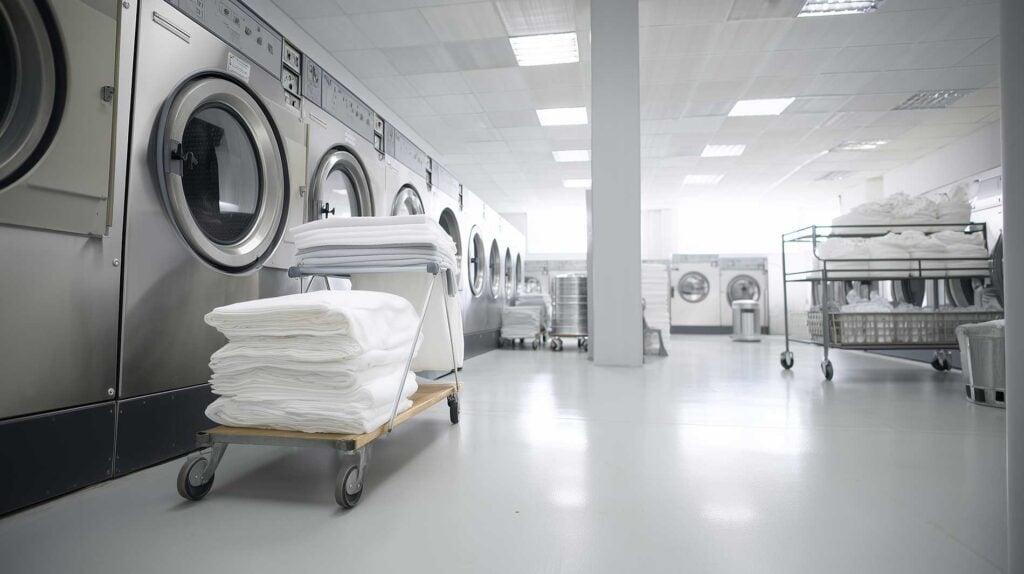
As another example, if laundry equipment breaks down, that could cause a workflow backlog, as your housekeeping staff won’t be able to wash dirty laundry for a set period. That backlog will grow the longer that unit stays down and could lead to lost labor costs or the inability to open rooms to new guests.
Example Scenarios That Demonstrate When to Repair vs. Replace
HVAC
A hotel’s rooftop HVAC unit stopped cooling guest rooms on one floor. The inspection showed that the control board had failed, while the compressor and fan motors still worked. The hotel chose to only replace the control board, not the whole unit, because the repair cost was low and the unit still had several years of expected useful life.
Laundry
A hotel laundry room had a washer that failed three times in six months. Each repair fixed the issue only briefly, and staff often had to send linens to an external laundry service, which cost the hotel more money and delayed room readiness. Management compared all these costs to the price of a new machine, while also considering the impact of reduced room availability on new guest intake. Ultimately, they decided to replace the machine.
Kitchen Equipment
The commercial kitchen equipment at one hotel location no longer met current fire and ventilation codes. These violations also put staff at risk during kitchen operations. Repairing the equipment wouldn’t resolve the compliance issue, so the hotel replaced it with newer models that met code requirements.
Refrigeration
A walk-in cooler was not maintaining the required temperature. Technicians found that the compressor had failed, but the rest of the system remained in good condition. The hotel replaced only the compressor because the repair cost was much lower than installing a new system, and this action was enough to keep the kitchen running smoothly.
How to Calculate Repair vs. Replace Outcomes
- Gather information on the unit in question, including its age, service history, and the typical cost of repairing it.
- Estimate the unit’s remaining useful life and compare it to the other asset KPIs you gathered in step one.
- Compare the total costs of maintaining that unit over the next 3 years vs. how much you would spend maintaining new equipment over that same period.
- Use the 50% rule as one screening tool, not to make the final decision. Adjust your evaluation using the 50% rule based on downtime risk and the asset’s criticality.
- Consider how repeated downtime will affect guest satisfaction. If you predict that the unit will fail often enough to damage your brand’s reputation, replace it.
Multi-Property Challenges and Why Standardization Matters
Visibility into how location managers make repair and replacement decisions matters. Consistent equipment repairs at one location can result in an inconsistent guest experience across all locations.
One reason that may be happening is a lack of centralized data. One location manager may be misled into believing they are making a more affordable decision when, in fact, they are making a more costly one for your hotel chain.
A centralized system that lets you track which decisions are being made at each location and why (if recorded). Train your location managers to report on asset servicing, preventive maintenance schedules, and equipment replacement frequency. You can use that information to detect patterns and respond as needed.
Repair vs. Replace Decision Checklist
| Check | Consider |
| Asset age | Compare the equipment’s age to its expected lifespan. If a unit is near or past the typical replacement point, a repair may only delay another issue. |
| Costs | Think about the 50% rule. Review the repair cost estimate to the cost of a new asset, including labor, installation, and the disposition of the old asset. |
| Failure rate | Track the asset’s service history over the past 12 to 24 months. Repeated issues with the same piece of equipment across multiple locations can point to a larger problem with that unit. |
| Parts availability | Check whether spare parts are still available and how long they will take to arrive. Older equipment may require hard-to-find parts or long lead times. |
| Energy efficiency | Compare the energy costs of your current asset with those of a newer model. Older models often use more energy, but a newer version may lower utility costs across all locations. |
| Downtime impact | Consider how downtime may affect guest satisfaction, staff workflows, and revenue. The less tolerance you have for downtime, the more likely you are to need a replacement if the unit is labor-intensive to repair. |
| Warranty status | Check warranty tracking data to see if your asset is still covered. If so, the manufacturer may be able to offset the repair costs. |
How Better Asset Visibility Improves Decisions
Clarity and visibility are the best tools you can have when deciding whether to repair or replace an asset. Agile, real-time data is the best way to gain both clarity and visibility into equipment operations across all locations. Key insights into service history, warranty information, and spending are all incredibly valuable in this decision-making process.
Using a centralized asset management system like ServiceChannel provides access to real-time data-driven insights. You can also use automated reporting features to provide a single source of truth for all the data you need to make key decisions.
Explore how better asset visibility supports smarter repair vs. replace decisions across properties.