
Hospitality Technology Consultant & Guest Contributor
Published on
October 16, 2026
No two hotels operate the same way. Learn why the best hospitality technology creates consistency across portfolios while adapting to the unique needs of each property.
It happened on a walk-through with our team, checking punch-list items off a whiteboard while three other problems competed for attention: a delayed HVAC repair, a vendor who no-showed a scheduled call, and a guest complaint one step from the front desk. Someone on the vendor side apologized, “I know this feels cookie cutter, but …” and stopped, because we both knew it wasn’t true.
I’ve been turning that phrase over in my head ever since.
Here’s why. The idea that hospitality technology would be “cookie cutter” misses the point entirely. Even the metaphor itself is backwards. Say “cookie cutter” and you picture one shape, stamped out endlessly. But hospitality technology was never supposed to work that way because no two properties are the same. A resort isn’t a select-service property; a luxury flag isn’t a highway limited-service box. Even two hotels flying the same flag, built from the same prototype, don’t run the same. They have different staff, vendor relationships, physical plants, and guests with different expectations.
At the same time, the conversations operators are having are the same.
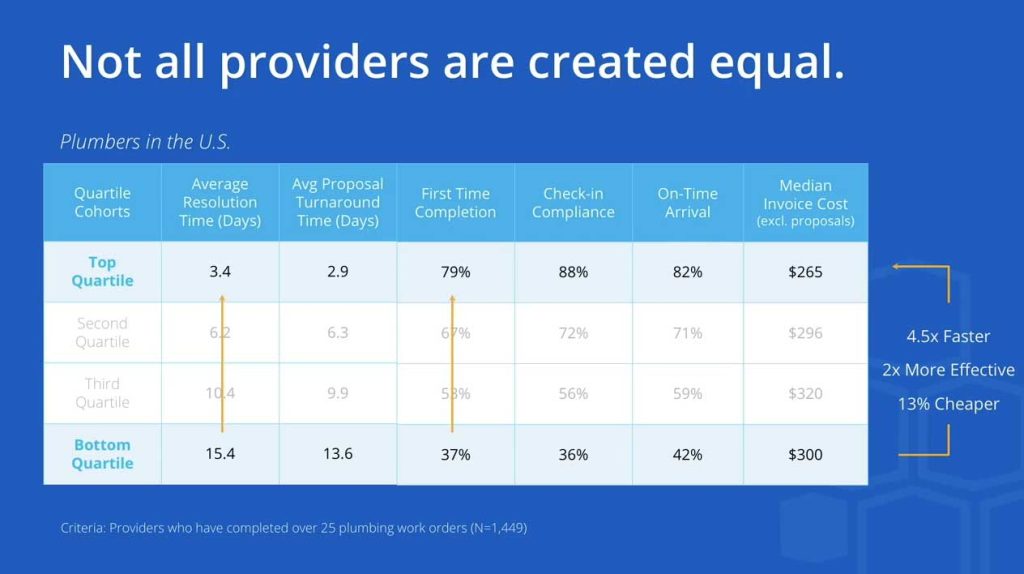
Every operator I talk with is facing the same challenges: guest experience on the line when a work order sits open too long, maintenance costs climbing as reactive fixes replace planned ones, uptime nobody notices until it fails, vendor performance that swings wildly across a portfolio.
A system that treats every property the same doesn’t solve those problems. It hides them.
The best hospitality technology doesn’t force every property into the same workflow. It creates consistency where consistency matters while leaving room for properties to also operate according to their own unique realities.
This is where platforms like ServiceChannel get tested. The challenge isn’t creating one process and imposing it everywhere, it’s giving operators a consistent framework for managing work across a portfolio while still recognizing that individual properties have individual needs. A beachfront resort’s saltwater pool system and a highway property’s single rooftop HVAC unit may look the same on paper, but they don’t necessarily call for the same trade, expertise, or response.
The best technology adds value when it accounts for those differences, not when it ignores them.
The longer I work in this industry, the less interested I am in technology that promises to make every property operate the same way. Hotels are different. The people, the buildings, the problems—are different. I’d rather have technology that understands that and works with it. That’s a higher bar. It’s also probably the one we should be measuring against.
As for the “cookie cutter” phrase, I think it survives because people worry the software assumes every hotel works the same way.
But if the technology is doing its job, it should be doing the opposite: helping operators solve familiar challenges in ways that fit their properties, teams, and guests.
That’s not one shape stamped out endlessly. That’s a platform flexible enough to take the shape of the property using it.
Tim Thilleman works at the intersection of hospitality operations and technology, advising hotel ownership groups and management companies on how systems actually perform in real-world environments. His perspective is shaped by time spent both inside hotels and in advisory roles across multi-property portfolios.